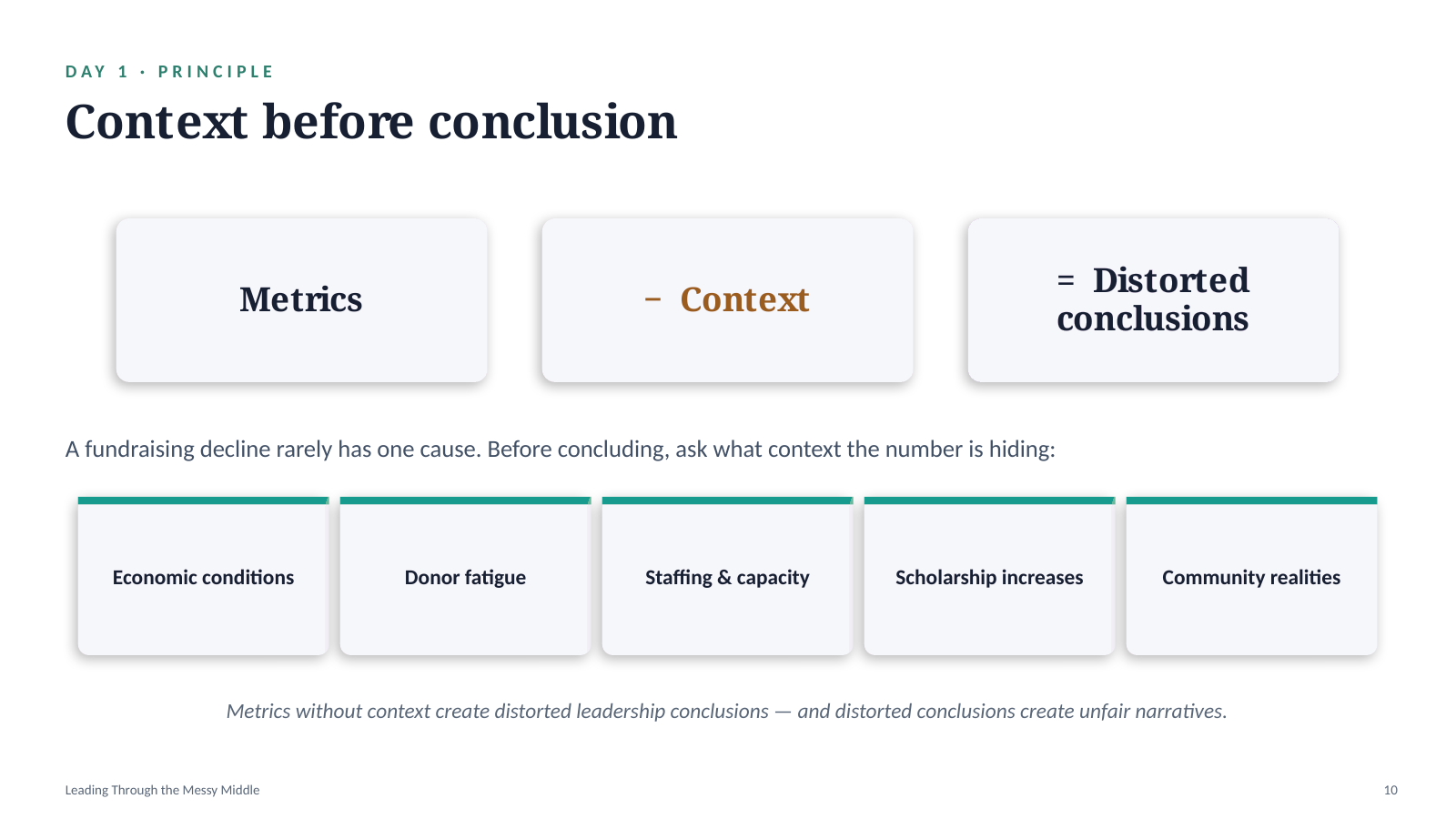
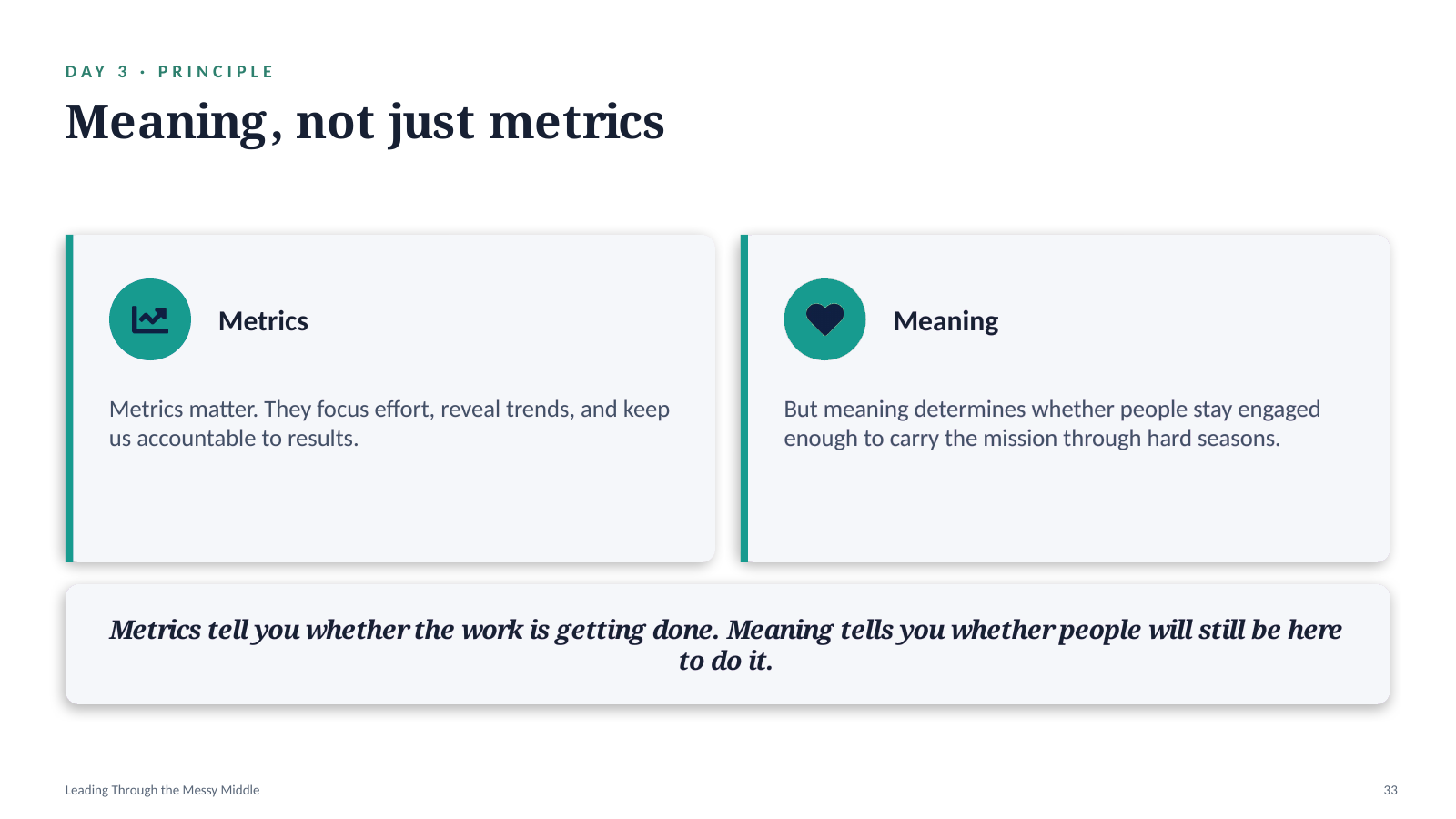
Implementation plans create necessary discipline. They establish timelines, owners, training, technology, and measurable milestones. But a completed checklist does not prove that people understand the future, trust the process, or know how their work changes.
01Completion and adoption answer different questions
Completion asks whether the organization installed the system, delivered the training, or launched the new structure. Adoption asks whether people can use it, explain why it matters, and see themselves succeeding in the changed environment.
When leaders confuse these questions, they interpret hesitation as resistance. They miss the uncertainty, experience, and identity work underneath the behavior.
02Meaning has to travel with the change
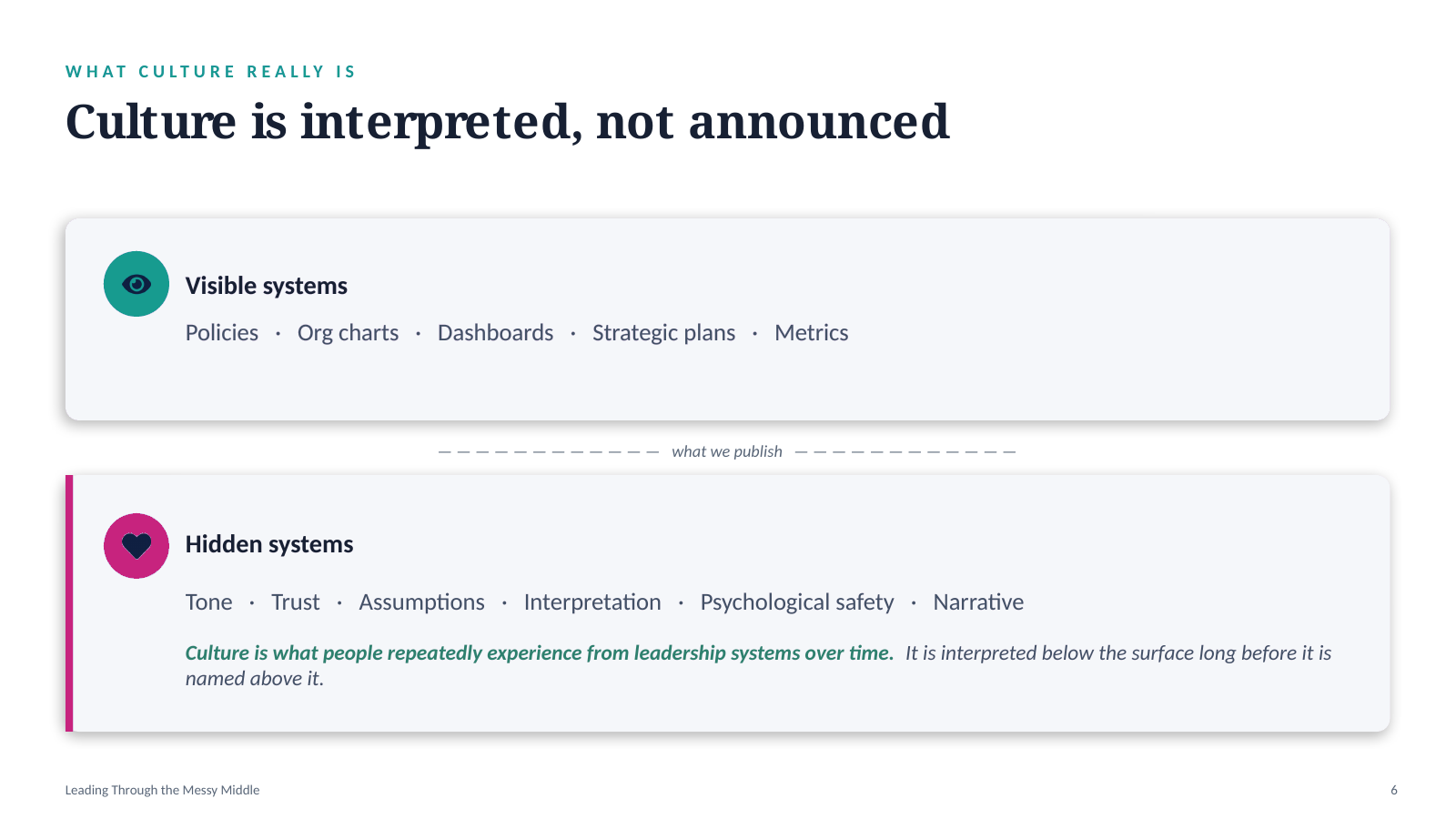
People make sense of change through conversations, comparison, feedback, and lived experience. They watch which questions receive serious attention. They notice whether leaders adjust when the rollout creates friction. Those moments shape the story people tell about what the change means.
That story influences commitment more than another announcement ever will. Leaders support adoption when they create a credible future, invite useful voice, build capability, and keep learning after launch.
03The work continues after implementation
Measure results and experience together. Examine who adapted, who remains outside the change, and what conditions make the new way easier or harder. Then adjust the system before blaming the person living inside it.