
What it means in practice
Individualized means the question begins with the person and the setting. The same tool may need a different example, pace, or conversation for another team.
What would a leader do differently tomorrow if they truly believed this?
I help leaders understand what people experience, what those experiences reveal about the systems they lead, and what they can change to strengthen both people and performance.
This work is built from research, practice, observation, reflection, and real organizational experience. It is not a finished archive. It is a living portfolio of how I think, build, test, refine, and individualize workplace tools for human systems.
This video gives the site a front door: the philosophy, the tools, the stories, and the practical work are all connected by one idea. People and systems shape one another.
Watch this first if you want the bigger picture before choosing a tool, article, reflection, or practice page.
Continue into the story series →A separate faith-rooted space for reflections on scripture, identity, alignment, and becoming.
BRITER holds the organizational work. Rooted & Becoming holds the spiritual reflection behind the person doing the work.
Visit Rooted & Becoming →

BRITER is intentionally alive: responsible, deliberate, individualized work that turns research into tools, experience into insight, and workplace complexity into something people can actually use.
Individualized means the question begins with the person and the setting. The same tool may need a different example, pace, or conversation for another team.
Responsible means following an idea through: checking what it changes for people, making the resource usable, and revising it when experience reveals a gap.
Deliberate means slowing down enough to examine readiness, evidence, tradeoffs, and consequences before calling an intervention a solution.
Evolving means treating practice as something to learn from. The work changes when people, culture, or conditions change; it is not frozen at launch.
Choose a section below to learn more about the part of the work that matters to you.
Why people and systems shape one another—and why lived experience and organizational worth matter.
02 · Feel the workWatch the four-video BRITER story series with reflection prompts before each conversation.
03 · Find your entrySearch the concepts, original tools, working studios, and applied examples by topic or by the work in front of you.
04 · Your directionUse Career Crafting and the Career Compass to reflect on career season, identity, strengths, work conditions, and possible next steps.
05 · Thinking partnerUse AI to check emotional intelligence, test assumptions, rehearse conversations, make spreadsheets useful, and strengthen resume/ATS alignment without losing your voice.
06 · Look closerExamine leadership, culture, feedback, metrics, and organizational conditions with BRITER reflection tools.
07 · Learn togetherFind facilitated activities and room tools that open discussion and make team habits visible.
08 · Reference shelfFind practical PDFs, guides, and support material without mixing them up with articles.
09 · Read and reflectFind stories and practical perspectives on leadership, coaching, culture, and meaning at work.
10 · Add your voiceShare a private comment, question, or lived example about what BRITER helped you notice.
11 · The person behind itMeet the founder and learn how her work in leadership and workplace psychology shaped BRITER.
This is the offering-level orientation: read the ideas, use a tool, bring the work into a team room, or apply it to career and leadership decisions. Resources now stay closer to reference and support material.
Onboarding is not orientation. It is the process of becoming part of a system.
Starting a leadership role means more than learning policies and responsibilities. New leaders are learning a system: its culture, relationships, expectations, measures of success, and how their own contribution affects the people and work around them.
You were hired to learn the job, not because you already knew it.
The experience introduces BRITER leadership and culture, shared competencies, coaching and feedback, organizational measures of success, and 30/60/90-day development.
Explore the New Leader Onboarding Experience →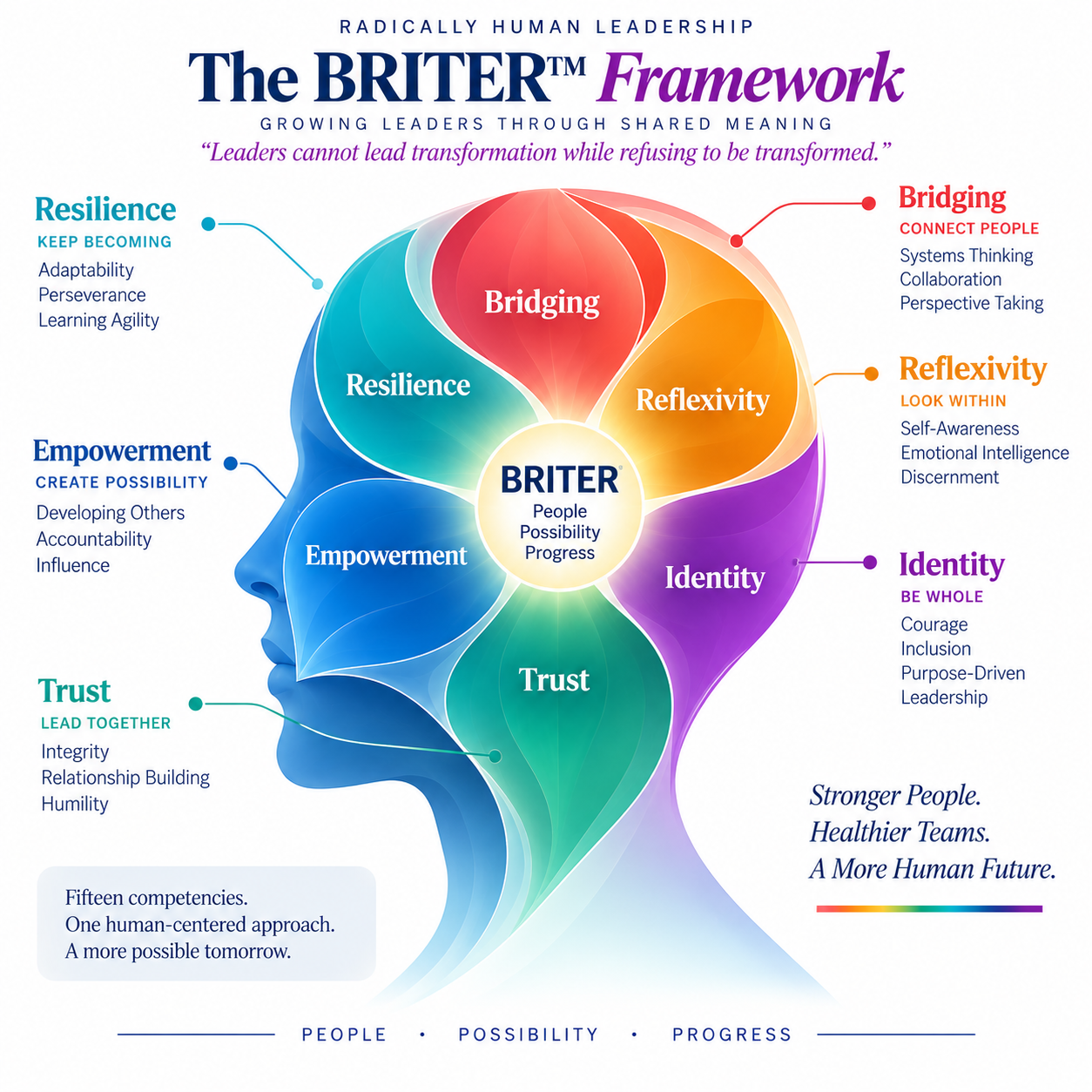
Leadership development that moves beyond consuming content and into reflection, practice, coaching, and real work.
The preview connects the Invisible Chain story, a fictional leadership scenario, the coaching question, and a 40·30·20·10 development pattern.
Insight becomes useful when it changes what a leader can practice next.
Enter the Leader Experience preview →Articles, stories, and BRITER thinking live together so the philosophy is easy to follow.
Open articles → PracticeReflection tools help leaders examine culture, feedback, metrics, and organizational conditions.
Open assessments → FacilitateRoom tools and activities make patterns visible without turning the conversation into a lecture.
Open team building → NavigateThe Resume + ATS experience helps a person connect job language to truthful career evidence.
Open Resume + ATS →People deserve to understand that they are valued in the system—and that their presence and contributions shape how it functions.